New Disavow Links Tool from Google Causes Much Alarm among SEO Professionals

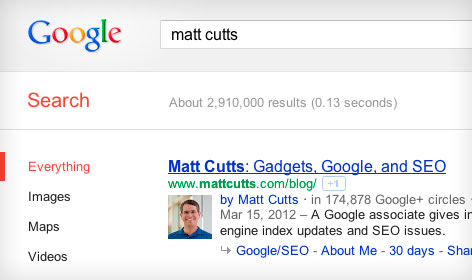
Last month at the Pubcon conference in Las Vegas, Google’s spam chief Matt Cutts announced the creation of a new tool to disavow links. When news of this tool was released, many a search engine optimization firm jumped in alarm as to how this would affect their hard fought gains in the search engines.

First a quick review of links – Google and other search engines use links as a signal to determine how reputable and important a particular webpage is, be it an article, a landing page, a blog post or even a press release.

Links serve as the basis of PageRank, which is one of many tools the search giant depends on to determine rankings. However, PageRank is open to all sorts of manipulation on the part of spammers, so Google manually reviews many of the sites it thinks has suspicious links pointing to it.

According to a description from Google, the disavow links tool is for sites who’ve been notified of a manual spam action based on “unnatural links” pointing to the site in question. Unnatural links include paid links, link exchanges or other link building methods that violate the search giant’s quality guidelines.

See a sample screenshot of this manual spam action/unnatural links notice from Google:

If your website receives this kind of warning from Google, you should work to remove as many of the offending spammy or low-quality links as possible. Some of these links though may be out of your control, which is where the Disavow tool comes in.

The Disavow tool basically allows you to suggest to Google the links you believe may be harming your rankings. The search engine will then take this information and decide whether it will ignore, or disavow, the links you believe are harming your rankings.  Notice we say “suggest” since Google isn’t obligated to dump the links, which is essentially the same way the “rel:canonical” tag works.

According to Google’s announcement, the search giant considers the disavow request as a “strong suggestion” rather than a directive.

Also, Google does say that the vast, vast majority of sites will never have a need for a tool like this. In its announcement, they clearly say that if you’re not sure what the tool does or whether you need to use it, you probably shouldn’t use it.

In fact, a report from Search Engine Journal discussing the new tool suggests you avoid the disavow links tool altogether, except under some very limited circumstances. First of all, even the most minor mistake in your text file that you send to Google can lead to disastrous consequences.

What if you accidentally enter a site that’s sending lots of good links your way?

If your site is large and has a relatively complex link scheme, this is entirely possible.

Also, identifying these “diseased” links can be very time consuming. If you go to the trouble to identify them and Google ends up indexing them anyway, you would have wasted your time.

With that said, SEJ’s report does list a few circumstances where the Disavow tool may be useful, which include:

1.     If your site lost rankings due to the Penguin update and you haven’t been   able to recover, even though you’ve worked tirelessly with external site owners to remove low value back links. If you were affected by Penguin, your site would have experienced a sharp drop in rankings in late April or early May of this year.

2.     Requests to Google following post-Penguin cleanup have been denied.

3.     Google has sent you an unnatural link notice but you’ve been unable to clean up the links you’ve identified.

4.     You can prove without a doubt that your site has been the victim of a negative SEO attack. Although many point to this as a source of their problems, it’s extremely rare.

5.     If you’re an experienced enough SEO who can spot low value backlinks quickly and effectively.

Unless you fall into one of these 5 categories, your time will be better spent building better quality links or working with link partners to modify existing links. Again, if you’ve been meticulous with your link building and only work with reputable sites, you shouldn’t have anything to worry about from Google in the first place.

How about you…have you received any unnatural link notices from Google?

If so, did any of these bad links affect your rankings?

Related Posts

Penguin Update Targets Link Schemes and Low-Quality Content

3 Steps You Should Take Before Linking to another Site

Link Building in the Post-Penguin World – Guest Posting

Understanding and Overcoming Google’s Penguin Update

8 Ways You Can Safely Sell Links on your Website

10 ‘On-Page’ SEO Tactics You Should Avoid At All Costs – Part II

Not following Google’s guidelines can lead to devastating consequences.

Last Monday, we discussed how certain SEO tactics (a.k.a. “black-hat” SEO) can get your site into a whole heap of trouble, and how these penalties can have devastating consequences for your business’ bottom line.

We outlined the first 5 of these ‘on-page’ SEO tactics you should absolutely avoid. In the interest of your time, we decided to break this into two separate posts.

Continue reading to learn the other 5 tactics you should avoid. This list is also helpful in identifying if any of these elements are on your site, or if any competitors are using any of these tactics. Being able to identify them will help you avoid a penalty, or worse, being totally banned from the search engines.

6.            Using the “Phantom Pixel”

The phantom pixel is essentially an image that’s so small – only one pixel – that it can’t be seen by your site’s visitors. However, these microscopic images can used to link to other pages, or the “alt-img” tag can be used to stuff keywords you’re trying to target.

Like hidden text (…or anything viewable by the search engines but hidden from human visitors), search engines absolutely hate the phantom pixel. Having just one on any web page on your site can result in a penalty, or even a complete ban.

To see if your site or any competitor’s site has hidden images, all you have to do is use “Ctrl+a,” which highlights everything on the page.

7.            Doorway pages

These are essentially low-quality pages that are automatically generated by software and are designed to rank well for as many keywords as possible. Many aggressive SEOs use these types of pages to funnel visitors into other pages designed to convert the visitor into a customer.

Creation of doorway pages often involves the use of two specific tools – one is a software program that ‘scrapes’ or copies content from other web pages or RSS feeds. This content is republished on the doorway page, which then links to the main sales page being targeted. The other tool, known as “Markov chain content generation” uses a special algorithm to combine words in a unique way. While hard for search engines to spot, this copy will look absolutely terrible to an actual person.

Therefore, do not use software to generate your site’s content. While it’s okay to use a system to “manage” your site’s content, it should be written by an actual person.

8.            Meta & JavaScript Redirects

Redirects are commonly used to steer site visitors away from obsolete pages or dead links. When used in this context, they’re okay.

However, spammers often times use redirects in a way search engines hate. The typical strategy is to build a page stuffed with keywords but then redirect the visitor to a sales page that would not rank well otherwise.

One way this is often done is to add a “meta refresh” to the <head> section of the HTML code. Here’s an example:

Example of Meta Refresh


Using this code will redirect, or refresh the page by sending the visitor to a different URL. The number “1” in the code we use above refers to the number of seconds to display the old page before redirecting.

JavaScript redirects are another way to accomplish the same thing. While search engines may scan JavaScript for URLs to index, they will not process the code. JavaScript redirects users to a different page, but the search engines will ignore that redirect and index the code on the initial, keyword-stuffed page.

Here’s an example of a JavaScript redirect:

Javascript Redirect Example


It’s important to note that redirects have many important uses from moving pages and rewriting URLs to changing domains. But since JavaScript and meta redirects have been so abused by spammers, it’s strongly recommended you use a 301 redirect if you need to send visitors to a new page.

9.            Little to no unique content

The importance of unique content has been something we can’t stress enough. The last two big algorithm updates from Google, which affected thousands of websites, were largely driven by this issue. This content issue often affects e-commerce type sites that simply use product descriptions provided by the manufacturer. While not considered spam, the search engines will remove these pages since they do not want to display hundreds, or even thousands of nearly identical pages.

This concept is true for both organic and PPC pages. If your site is promoting an offer from an affiliate, the Quality Score can drop so low that you will need to pay extremely high costs to keep your ad pages active.

If your site is in an affiliate program or reselling products, develop product descriptions that are unique from what the manufacturer provides. In all likelihood, there are hundreds of other affiliate type pages using the same content. Separate yourself from the pack and reap the benefits over your competitors.

10.          IP delivery (…or cloaking)

Considered one of the most complex and controversial of SEO strategies, IP delivery or cloaking involves serving one page to your human visitors while serving a different one to the search engines. Doing so essentially hides the real page, which is the one visitors will see, from the search engines.

However, cloaking also has some legitimate uses. Since search engines cannot index Flash content (…which human visitors love), webmasters may serve different content to the search engines so the page can be indexed. It’s easy to claim that providing content that the search engines can index benefits users. On the same token though, it’s easy to claim a setup like this is a loophole that’s ripe for exploitation.

Real briefly, when a visitor comes to your site, they’re identified through an Internet Protocol (IP) address. If you get online through cable Internet or DSL, you in all likelihood have a permanent IP address assigned to you. Search engine spiders have their own unique IP addresses as well. Some SEOs go to great lengths to identify the IP addresses used by search engine spiders, which allows them to identify if a visitor is the search engine spider or an actual human visitor.

If the IP address/number doesn’t match with their list of search engine IP addresses, the SEO/webmaster assumes the visitor is an actual human and serves up the page designed for human eyes, which often times includes graphics, JavaScript, Flash, etc. Conversely, if the IP address matches one they’ve identified as a search engine spider, then a text-only, keyword-rich page is served up.

Like hidden text and images, any time you serve different content to your human visitors, you’re asking for trouble. While search engines do make a few exceptions for cloaking, it’s best to pay it safe.

When discussing acceptable and unacceptable SEO practices, the debate often devolves in the white hat vs. black hat camps. In reality, there are a lot of grey areas.

The big question you need to ask is if your website is providing value to visitors. Remember, search engines are in the business of delivering the most valuable, relevant pages to their users. If they’re constantly delivering junk, people will quit using them. Therefore, if someone uses tactics that attempt to rank low-quality pages high in the search results, they shouldn’t be surprised when the search engine takes action to remove the offending site.

Remember, any strategy that sacrifices long-term, sustainable rankings for short-term gain is asking for trouble. Make sure your web pages offer value to your visitors while, at the same time, letting the search engines know what your pages are about.

Have you used any of these SEO strategies, whether intentionally or not, in the past?

If so, were you penalized? If you were, how long did it take you to recover?

Let us know in the comments section below or drop us a line on Facebook today!

Related Posts

10 ‘On Page’ SEO Tactics You Should Avoid At All Costs – Part I

Answer These 23 Questions to Understand What Google Looks For

Penguin Update Targets Link Schemes and Low-Quality Content

3 Steps You Should Take Before Linking to Another Site

Google Panda Update Causes Some Sites to Lose Traffic, Revenues


10 ‘On-Page’ SEO Tactics You Should Avoid At All Costs – Part I

Don't let Google put you in the penalty box for trying to outsmart them

Don’t let Google put you in the penalty box for trying to outsmart them. You can’t, at least not for long.

Being penalized by the search engines for any tactics they deem against their guidelines can have dramatic consequences for not only your website’s position in Google, but your business’ bottom line as well. Each time Google releases a big update, it’s not hard to find stories about sites/businesses losing revenues and laying off staff.

The so called “black hat” SEO tactics detailed below clearly violate search engines’ published guidelines. We hope that discussing tricks search engines find objectionable will help you recognize, and thus, avoid them.

Knowing these tactics will also help you recognize when a competitor is using them. While it may be tempting to copy them, you should definitely refrain from doing so. Eventually, they will be penalized and you will be rewarded by taking their spot.

In order to have a sustainable SEO strategy, you should avoid the following tactics at all costs. Continue reading for the first 5…check back with us later in the week for the remaining 5 tricks you should avoid.

1.       Keyword stuffing

Literally repeating the same keyword over and over again is one of the oldest, easily recognizable black hat tactics. Search engines absolutely hate keyword stuffing and can recognize it pretty easily.

One common keyword stuffing tactic is the <h6> tag, which makes text so tiny that humans can’t see it but search engines can. Many a webmaster has simply placed this code near the bottom of a page. Another tag, <font size = “0”> is another way to stuff keywords without people noticing. Other places where webmasters have been known to stuff keywords include meta description, title tags and image ALT tags.

While these methods can sometimes yield short-term benefits, they rarely work for the long-term. Search engines can be tricked, but they eventually catch on.

2.       Text that’s invisible or semi-visible

As a search engine optimization company, one of the paradox’s we deal with is making a webpage that appeals to both search engines AND humans. While search engines award high rankings to pages with lots of copy, people typically respond to pages with special effects and other design elements that search engines can’t easily crawl.

Invisible text is one method that’s been used in the past to deal with this dilemma.

For example, many webmasters and SEO pros would set the text color the same as the background color, which effectively blends the copy with the background color of the page, which makes it invisible to people but visible to search engines. Semi-visible copy (i.e. gray copy on a white background) was being used once search engines became able to detect invisible text.

The easiest way to see if a competitor is using one of these tricks is to use Ctrl+a to select all, which will highlight all of the text on a web page.

While this may sound like a good trick, think again. Hidden or semi-visible text is one of the easiest ways to get your entire site kicked out of the search engines altogether. You in fact run a high risk of being penalized or banned anytime you show different content to search engines than what’s visible to your human visitors.

3.       Using CSS to Hide Text

CSS, or cascading style sheets, is another way to hide text from human visitors while making it visible and indexable to search engines. Here’s an example:

Some people try to stuff their page with keywords hidden in css

Akin to keyword stuffing, this method will render this text invisible to a human visitor while making it completely visible to search engines. Using the “Ctrl+a” method we detailed in #2 will not make the text visible. To see if a competitor is using this method, you will need to view the page’s source code.

Even though this method isn’t quite as risky as the invisible/semi-visible method, you still run the risk of being picked up by a manual review, which is why we urge webmasters to avoid it.

One method that is acceptable is when you give the visitor the ability to unhide the text. A good example of this in practice is CSS tabs that let you tab hidden and unhidden text. For example, you may come across product descriptions that have separate tabs for [Description], [Specifications], [Comments] and others.

4.       Selling Links

Many site owners sell links on their sites in order to increase the target URL’s PageRank. Your first warning for scrubbing PageRank or not using a rel=”nofollow” attribute will be your PageRank being dropped to zero. Considered a “shot across the bow” from Google, this won’t immediately result in lost rankings. But if you fail to address the issue in a timely manner, you could be dropped from the search engines altogether.

Paid links often look unnatural. For example, if we included links on SEO-e for a cheap travel site or a travel agency, they would look totally out of place to both the search engines and our visitors.

Being infected by Malware or being hacked is another way selling links puts your website at risk. If you have your site setup in Google’s Webmaster toolbox, they will warn you if they detect your site is being hacked or hosting Malware.

5.       Hiding Links

The purpose of hiding links is to give link juice, or PageRank, to favored web pages. These strategically placed links will direct the spider to an off-topic site the webmaster is wanting to index or rank well in the search results. Like hidden text, these links are only visible to the search engines, not your site’s visitors. Since they have no value to the site visitor, search engines absolutely hate them.

You can also make links “semi-visible” – like having the link embedded in a period at the end of a sentence.

While technically “visible,” you run the risk of being penalized since you’re showing something different to search engines than you are to real human visitors.

These are some of the most common tricks we come across on websites. If we spot them on a site we’re working on, we immediately fix them so the site doesn’t get penalized any further, or worse, delisted from the search engines altogether.

As we said above, check back later in the week for the other 5 SEO tricks you should avoid at all costs.

Have you been penalized because you used one or more of these tactics?

If so, how did you address the issue? How long did it take for you to regain the lost ground?


URL Syntax and How It Can Dramatically Affect SEO

While it may seem like a minor detail, we can’t tell you how many times we’ve spotted bad URLs in a website…in fact, it’s one of the first things that jump out at us when evaluating site from strictly the ability to be crawled and indexed.

Search engines do in fact take time to crawl just about any URL, no matter how badly it’s set up.

Taking a little bit of time to manage your URLs to ensure they display properly though can provide multiple benefits – in terms of both SEO and usability.

Take this URL for example:

http://www.seo-advantage.com/website-optimization-company.htm

This “breadcrumb” style that includes keywords is best type of URL to have. Since we know keywords in your URL is a ranking factor in Google’s algorithm, this “general to specific” approach makes the URL easily crawlable. Also, a URL like this already has anchor-text embedded in it so even if it’s listed on other pages like we’ve done above, you will still get some of the keyword ranking benefit…just like if you link to it using actual anchor-text (i.e. website optimization company).

Back in 2009, we wrote a post on proper anatomy of a URL and included a cheat sheet developed by Dr. Peter Meyers at SEOMoz. It’s handy to have a copy of this cheat sheet available as you evaluate your site’s URLs.

Our example above differs from some of the URLs you’ve likely encountered in the past. These old style, “dynamic” URLs include a bunch of characters. While these long URLs can be indexed, any symbols (parameters) like a “&” or “@” will dilute the impact of keywords that may be in the URL.

These older style URLs also may include information like user ID, session ID, sort code, print code and other parameters that’s transmitted outside of the URL. If a webpage address includes parameters, it is possible that you can run into duplicate content issues.

Auditing your site’s URLs and addressing any issues

A site’s content management system, or CMS, can lead to issues with your URLs. Some systems use characters like a “#” or “%” that are not legal to use. Others generate multiple URLs for the same page, leading to duplicate content issues.

By using Google and Bing webmaster tool reports and taking a careful look at the URL syntax for all of your pages, you should be able to determine if URLs are hindering your search rankings and usability of your website.

First thing you should look for are unsafe characters. There are several that aren’t even allowed in fact, and others that will not be indexed. Google doesn’t read anything past a pound character (“#”) for example. Therefore, if you have that symbol in your URL, search engines will ignore the symbol and anything past it.

For example, …website-optimization-company.html#seo-friendly-url will not be indexed. But if you change it to …website-optimization-company/seo-friendly-url, it will.

Other items to look out for include:

  • Underscores – problematic for SEO since search engines see these characters as connectors. Consider using dashes to separate words.
  • Mixed case – with the exception of machine names, URLs are case-sensitive. Having mixed cases can lead to duplicate content. The easiest way to deal with this issue is to have your website automatically rewrite all URLs into lower-case.

If you have long URLs with lots of parameters and other characters, how you transition to an SEO-friendly URL structure will depend a lot on the CMS system you’re using. Here are a few general options you can consider for cleaning up your site’s URLs and dealing with any duplicate content issues:

  • Reconfigure your CMS platform to generate one consistent URL for each page of content
  • Do a 301-redirect for any duplicate URLs to the new or correct version
  • Add canonical tags (…a way of communicating the preferred page to Google) that will direct search engines to group duplicate content and combine their ranking signals
  • Configure URL parameters in webmaster tools that direct search engines to ignore URL parameters that may cause duplicate content

Check out this piece from Tom Schmitz in Search Engine Land for more information on unsafe URL characters and other ways of dealing with bad URL structure.

Understand that not all CMS systems are created equal. You may be using one that will not allow you to modify the URL structure to be SEO-friendly. Even if you can’t optimize your URLs for the search engines, you should definitely make sure they meet minimum standards. For more information on these standards, click here.

Does your site have a bad URL structure?

If so, how badly is it affecting your position in the search engines?

Related Posts

Proper Anatomy of a URL – An SEO Cheat Sheet

Use Caution with Session IDs and Dynamic URLs


Understanding the Intent of Search Queries – EMI vs. EMQ

In the early days of search engine optimization, all a site owner or SEO pro had to do was to use the exact phrases people were searching for in their copy. Simply include “keyphrase” in your page’s URL, title, META tags and copy a sufficient number of times and your landing page would rank high.

As the Google algorithm has developed though, this exact phrase matching in your copy isn’t really necessary anymore. In fact, it can really hurt you if it’s overdone…no longer do you see pages with lots of keywords peppered in the copy at the top of the search results.

Rather than include the exact phrase several times in a page, sites who best match the intent of a search query are the ones seeing higher rankings in the search engines.

Google’s big algorithmic updates, namely Panda and Penguin, have changed the search landscape quite a bit.

Rather than matching keywords with a site query, raters and algorithms at the search giant now attempt to determine a user’s intent and then serve pages based around that intent. Pages simply stuffed with keywords are now labeled spam and subsequently dropped from the rankings…Google assumes no one intends to visit a page that’s simply stuffed with keywords and contains little to no real information.

Essentially, there are 3 different query types – action, informational and navigational.

For SEO purposes, action queries are by far the most important. These searches can be characterized as users wanting to “do” something, like “buy Ford widgets.” Informational queries on the other hand are for users wanting to “know” something (i.e. “what are Ford widgets”).

Therefore, the more a page can obviously match query intent by using all of a page’s semantic signals, the higher, over time, it will rank for that query.

(Semantic Index is a part of Google’s algorithm that determines what a site is about and how much it is supposedly about its given topic compared to other sites. In technical terms, these semantic “signals” include such things as the URL, Title Tags, META keywords, META description, BODY tag, IMG alt, internal/external links and external mentions/references.)

So how do I maximize these “signals” so Google properly ranks my page(s) according to a user’s intent?

This is where we get into what’s technically known as EMI and EMQ, or “exact match intent” and “exact match query.” The difference between the two can be summed up this way: new vs. old.

EMI essentially means you develop a page around communicating the “intent” of the page. Is it for informational purposes or action purposes? Determining what a specific page is about (i.e. information vs. action) will help you maximize its EMI.

To maximize your page’s EMI, one thing you can do is to provide info pages for info queries and action pages for action queries. If Google thinks a user is simply looking for information, they assume the user doesn’t want to be sold anything just yet. Therefore, if you try and “sell” to info users, you’re taking a big risk.

EMQ on the other hand, in terms of SEO, basically consists of the exact phrase you’re targeting. These should only be used in the URL of your page or the Title tag – BUT NOT BOTH. Exact Match Queries should be used sparingly in your copy text and backlinks. In fact, partial keywords are okay in this case since Google can most likely determine a user’s attempt in relation to your page.

The important lesson – one we’ve often repeated here at SEO-e – is to write for humans and not search engines.

We feel that Google’s updates over the last couple of years have dramatically changed how we should approach web content. While keywords are a fundamental part of a site’s attributes (i.e. URL, META tags, copy, etc.), they don’t necessarily need to be obvious.

Check out some of our prior posts below on keywords and ways you can harness them for maximum benefit.

Related Posts

11 Steps to Increasing Keyword Saturation while Maintaining Valuable Content

Latent Semantic Indexing and Keywords – A New Way to Look at Copy

Penguin Update Targets Link Schemes and Low-Quality Content

Google Panda Update Causes Some Sites to Lose Traffic, Revenues